A wound may heal, but must keloid scars remain visible forever?
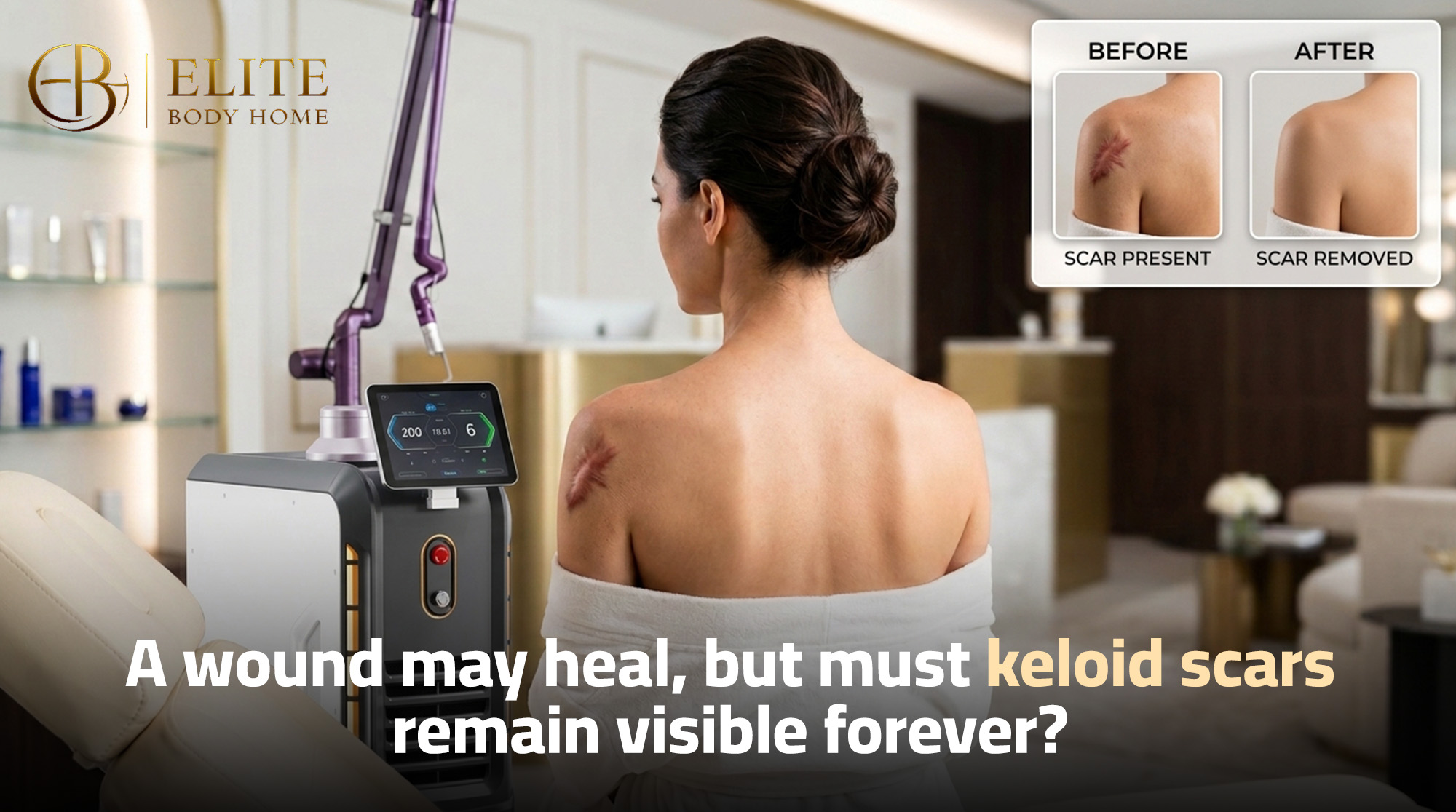
A keloid is a pathological scar that poses a significant functional and aesthetic burden. Despite growing interest in keloid scar treatment, the lack of standardized guidelines or treatment protocols endorsed by academic bodies remains a major challenge. Furthermore, the mechanism behind keloid scar formation is not yet fully understood. In this blog, we answer the most frequently asked questions about keloid scar treatment in Dubai.
What causes keloid scar to form?
Anything that causes skin to scar can develop a keloid. Not everyone has keloid-prone skin, but if you have, this scar could appear following a:
- piercing of the body, particularly the ears.
- Burns.
- Scrape, cut, or insect bite.
- Inflammatory skin conditions such as folliculitis.
- Tattoo.
- injury brought on by an injection, surgery, or treatment
- When they shave their beard area, some people develop a keloid.
- Additionally, unaffected skin may develop a keloid. We refer to this type of keloid as a "spontaneous keloid."
There are very few documented occurrences of spontaneous keloids since they are uncommon. Research indicates that these keloids could happen when:
- The person is unaware of the skin injury since it is so small.
- The body experiences severe inflammation as a result of an illness.
- Some drugs are taken.
It's unclear exactly what goes on inside the body to generate keloids. The body creates more collagen than it requires to repair damaged skin, according to research. Because of this, the keloid scar becomes larger than the original incision.
Read Also: Complete Guide to Keloid Scar Treatment After Piercing or Surgery
How do you get rid of a keloid scar?
Keloid Scar treatments are influenced by various factors, such as the size, location, and whether the scar is painful or restricts movement. The choice of treatment may also depend on your age and how old the scar is.
Treatment options may include:
Over-the-counter silicone gels and sheets are commonly used to help prevent keloids or stop them from growing.
Researchers suggest that silicone interacts with skin molecules, increasing surface tension and encouraging the body to reduce collagen production in the affected area. These products may also help repair damaged blood vessels and reduce scar redness.
Dermatologists generally recommend using silicone-based scar treatments for at least 12 hours per day. Silicone gels and sheets are most effective for small keloid scars or as a preventive measure for newly formed scars.
Topical treatments such as ointments or injections for a keloid scars may help to get rid of it as the following:
A prescription-strength corticosteroid cream can help relieve the itching associated with keloid scars. Avoid scratching or picking at the scar, as this can worsen the condition and stimulate further scar growth.
Corticosteroid injections can help reduce the size of a keloid scar. Steroids work by decreasing inflammation and redness while also disrupting the collagen fibers that contribute to excessive scar formation. Steroid injections may be used to treat existing keloids.
For people who are prone to developing keloids, a physician may also administer steroid injections before or during surgery to reduce the risk of recurrence. Specialists often recommend a series of five steroid injections, spaced 4 to 6 weeks apart, to improve the scar's appearance and reduce its size.
Some keloid scars may be treated with low-dose superficial external beam radiation therapy, particularly after surgical removal, to help lower the risk of the keloid returning. This treatment uses concentrated X-rays directed at the scar and primarily targets the upper layers of the skin. It helps destroy collagen-producing cells and reduces the formation of excess scar tissue.
The procedure is painless and usually takes about 10 minutes. Superficial external beam radiation therapy is generally recommended only when silicone treatments or steroid injections have not been effective. If you undergo surgical removal of a keloid, your physician may also recommend radiation therapy afterward to reduce the risk of the scar returning.
Pulsed-dye laser therapy can help relieve itching, reduce redness, and gradually fade the appearance of keloid scars. Keloid scar treatment is typically performed over multiple sessions, spaced 4 to 8 weeks apart. It is often combined with corticosteroid injections to improve outcomes.
Side effects are more common in people with darker skin tones and may include blistering, crusting and changes in skin pigmentation (hypopigmentation or hyperpigmentation).
Cryotherapy involves freezing the keloid scar with liquid nitrogen and is generally most suitable for small keloid scars.
Possible side effects include blistering, pain or discomfort and skin lightening (hypopigmentation).
If other treatments are unsuccessful, your doctor may recommend surgical removal of the keloid scar. However, keloids have a high risk of recurrence after surgery. To reduce this risk, surgery is often combined with additional treatments, such as corticosteroid injections or radiation therapy, to help prevent the scar from returning.
How is a keloid scar diagnosed?
A keloid scar is diagnosed by a healthcare expert following a physical examination. Testing is frequently unnecessary because the appearance of the scar provides an accurate diagnosis. If your doctor suspects another ailment or wants to rule it out, they may do a skin biopsy to study a small portion of your damaged skin tissue under a microscope.
Are keloid scars dangerous?
In most instances, keloid scars pose no direct medical threat, but they must not be dismissed. These keloid scars can lead to significant complications:
- Persistent itching
- Pain or tenderness
- Restricted mobility, especially when located across joints
- Emotional discomfort or self-consciousness
In rare cases, alarming changes such as ulceration, unexplained bleeding, or sudden growth, require immediate medical assessment. If symptoms are severe, atypical, or potentially life threatening, obtain emergency medical attention without delay and consult a physician immediately.
Do keloids go away permanently?
Overall, Keloid scars will never completely disappear to leave skin with a normal texture but some mild keloid scars can gradually flatten, become less red, and soften over time.
Whilst keloid scar treatment can help manage keloid scars and reduce their prominence, they can still grow back following treatment.
What is the cost of keloid scar treatment?
The cost of keloid scar treatment varies depending on how big the scar is, where the scar is, and how complex the procedure is. This cost may also include any additional treatment after the keloid removal procedure, such as steroids.
What is the best clinic for keloid scar treatment near me?
Elite Body Home is recognized as the premier clinic for keloid scar treatment, integrating cutting-edge medical technology with a specialized, comprehensive approach to scar management. If you are looking for a definitive solution for persistent scarring, here is why we are the leading choice in Dubai:
- Over 25 Years of Clinical Expertise: Our DHA-certified doctors bring more than two decades of experience in treating diverse skin types. We possess a deep understanding of keloid biology, allowing us to develop customized protocols that extend far beyond standard surface-level treatments.
- Multi-Modal Treatment Technologies: We employ a sophisticated suite of advanced tools, including high-precision lasers, cryotherapy, and intralesional injections. By combining these methods, we treat keloids from multiple angles to achieve optimal flattening and lasting relief.
- Respect for International ISO Standards: Your security is our top concern. For clinical cleanliness, we closely adhere to global ISO quality standards. Every surgery is carried out in a sterile, top-notch setting to avoid inflammation, which is a major cause of keloid formation.
- Dermatological Accuracy and Evaluation: We examine your skin's healing patterns in addition to treating the scar. To ensure you receive the appropriate medical treatment, our specialists do a comprehensive clinical evaluation to differentiate between hypertrophic scars and actual keloids.
- Aesthetic-First Approach to Healing: Restoring your skin's natural texture is our main goal as Jumeirah's top aesthetic clinic. Our minimal-invasive methods are intended to create a seamless outcome by softening and integrating the scar into the surrounding tissue.
- Verified Clinical Reputation: Our reputation is based on effectively treating challenging skin disorders that other clinics might overlook, as seen by our 4.8-star average and more than 1,200 genuine Google reviews.
- Complete Aftercare & Support: Long-term dedication is necessary for keloid management. To guarantee that your results stay flat and stable, we offer comprehensive medical advice on pressure therapy, silicone application, and UV protection.
Take the First Step Toward Smoother, Healthier Skin
If you're looking for a personalized solution for keloid scar treatment in Dubai, the experienced dermatology team at Elite Body Home Clinics provides comprehensive skin evaluations and customized treatment plans based on your scar type and individual condition. Whether you're considering laser treatment, steroid injections, cryotherapy, or other advanced treatment options, booking a professional consultation is the first step toward improving the appearance of keloid scars and restoring smoother, healthier-looking skin with confidence.
FAQS
What should I avoid after keloid scar treatment?
After keloid scar treatment you should:
- Avoid body piercings, tattoos, or any surgery you do not need.
- Keep new wounds clean and moist so they heal quickly.
- make sure your bath water isn't too hot.
- Try to avoid activities that could harm new wounds.
- Cover new scars with a silicone gel bandage.
- Protect scars from the sun when you are outdoors.
- Don't do things that might stretch a healing scar, especially a scar on your chest or belly.
Can keloid scars come back after treatment?
If you’ve had a keloid removed and watched it grow back, the frustration is real and understandable. Keloid removal can take away raised scar tissue, but your skin still has to heal after the procedure. In keloid-prone skin, that healing process can restart the same scar response. At International Keloid & Scar Treatment Center in Orlando, we plan keloid removal with recurrence risk in mind from the start.
How many sessions are needed for keloid scar treatment?
Best outcomes can be achieved after 2-6 sessions, the procedure can take 1-5 minutes and results can last for months or years.
How do I choose the best clinic for keloid scar treatment?
Ensure you choose a clinic staffed by specialists in treating keloid scars that offers an accurate diagnosis, a treatment plan tailored to your specific condition, and modern treatment options, while also reviewing patient testimonials and outcomes from previous cases.