Facial Aging in Dubai: Understanding Volume Loss, Skin Laxity, Wrinkles and Pigmentation
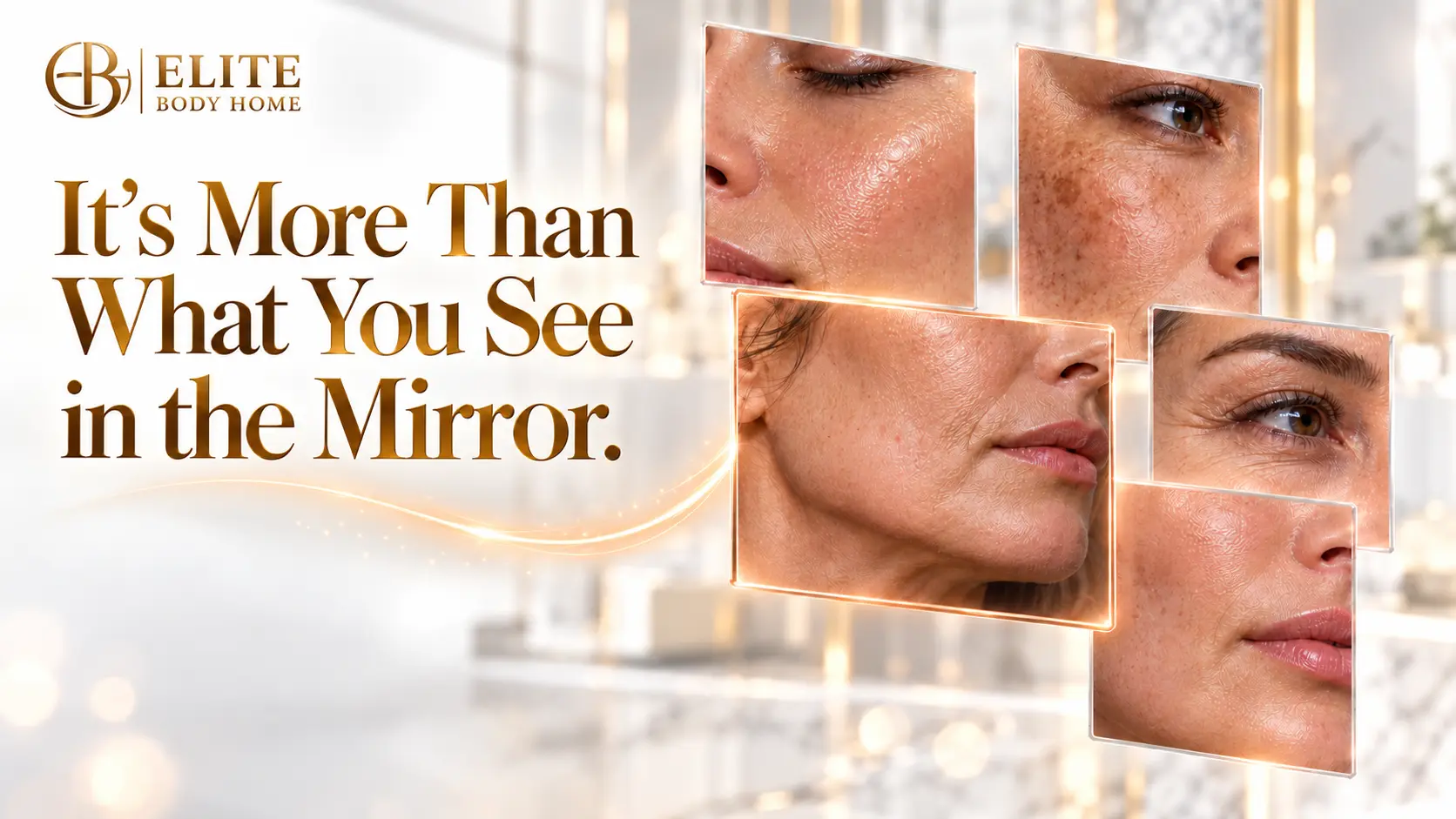
When you notice changes in your face, it can be difficult to identify exactly what is happening. Is your skin losing firmness? Are fine lines becoming more visible? Has your facial volume changed, or are dark spots affecting your complexion?
Although these concerns may look similar, they often have different underlying causes.
At Elite Body Home Polyclinic in Jumeirah 1, Dubai, the approach to aesthetic treatment planning begins with understanding the patient's individual concerns rather than selecting a procedure simply because it is popular.
The treatment should follow the concern, not the trend.
In this guide, we explain four common facial concerns—volume loss, skin laxity, muscle-related wrinkles and pigmentation—and how a professional assessment can help determine appropriate treatment options.
What Are the Four Common Facial Aging Concerns?
Quick Answer: Four common concerns associated with facial aging are volume loss, skin laxity, expression wrinkles and pigmentation. Volume loss involves changes in facial fat or structural support, skin laxity refers to reduced skin firmness, expression wrinkles develop partly through repeated muscle movement, and pigmentation involves changes in skin color.
These concerns can occur individually or together.
Understanding their differences is important because a treatment designed for one concern may not address another.
1. Facial Volume Loss: When Facial Contours Change
Facial volume loss refers to changes in the soft tissues and structural support that contribute to facial shape.
As people age, changes may occur in facial fat compartments, bone structure and other supporting tissues.
These changes can influence the appearance of the cheeks, temples and lower face.
What Are the Signs of Facial Volume Loss?
Common signs may include:
-
Reduced fullness in the cheeks.
-
Changes in facial contours.
-
More noticeable folds around the nose and mouth.
-
Hollow-looking temples.
-
Changes in the appearance of the under-eye area.
Not every facial hollow or fold is caused by volume loss. An assessment is needed to identify contributing factors.
What Treatments May Be Considered for Facial Volume Loss?
Depending on the patient's anatomy and medical suitability, a clinician may discuss selected dermal filler treatments.
Hyaluronic acid fillers can be used for certain facial volume and contour concerns, depending on the product and approved indication.
Explore nasolabial fold fillers in Dubai.
Can Botox Restore Facial Volume?
Quick Answer: Botox is not primarily a facial volume-restoration treatment. Botulinum toxin works by temporarily reducing activity in selected muscles, whereas dermal fillers may be used to address certain volume-related concerns.
Dermal fillers carry risks, including rare but serious vascular complications. Treatment suitability and product selection require qualified medical assessment.
2. Skin Laxity: When Skin Loses Firmness
Skin laxity describes reduced firmness or increased looseness of the skin.
It can develop as a result of age-related changes in collagen, elastin and other skin structures.
Sun exposure, smoking, significant weight changes and individual genetic factors may also contribute.
What Are the Signs of Skin Laxity?
Possible signs include:
-
Looser-looking skin around the jawline.
-
Reduced firmness in the cheeks.
-
Changes in lower-face definition.
-
Skin looseness around the neck.
-
Increased appearance of certain folds.
What Treatments May Help Address Skin Laxity?
Depending on the degree of laxity and individual suitability, treatment discussions may include:
-
Energy-based skin-tightening procedures.
-
Selected ultrasound-based treatments.
-
Radiofrequency-based procedures.
-
Other clinically appropriate options.
Some patients may enquire about HIFU face and neck treatments in Dubai.
The appropriate treatment depends on the severity of laxity, device indications and the clinician's assessment.
Is Skin Laxity the Same as Volume Loss?
Quick Answer: No. Skin laxity refers to reduced skin firmness, while volume loss involves changes in facial fullness and structural support. Both can contribute to changes in facial contours, but they may require different treatment approaches.
3. Expression Wrinkles: When Muscle Movement Contributes to Lines
Facial muscles help us smile, frown, squint and express emotions.
Over time, repeated facial movements can contribute to visible expression lines.
These are commonly called dynamic wrinkles.
What Are Common Expression Wrinkles?
Examples include:
-
Forehead lines.
-
Frown lines between the eyebrows.
-
Crow's feet around the eyes.
-
Selected lines associated with facial expressions.
Some lines become visible even when the face is relaxed. These are often described as static wrinkles and may involve several contributing factors.
What Treatments May Be Considered for Expression Wrinkles?
Botulinum toxin injections may be used to temporarily reduce activity in selected facial muscles.
The procedure may soften the appearance of certain expression lines when clinically appropriate.
Explore full-face Botox in Dubai.
Does Botox Treat Every Type of Wrinkle?
Quick Answer: No. Botox primarily acts on muscle activity and may be suitable for selected expression lines. Wrinkles caused by volume changes, skin laxity or surface skin damage may require different approaches.
Possible side effects include bruising, unwanted muscle weakness and eyelid drooping. Results are temporary and vary by individual.
4. Skin Pigmentation: When Skin Tone Appears Uneven
Pigmentation concerns involve changes in skin color caused by variations in melanin or other underlying processes.
In Dubai, ultraviolet exposure is an important consideration because sunlight can contribute to certain pigmentation changes.
However, pigmentation may also be associated with hormones, inflammation, medications or medical conditions.
What Are Common Types of Facial Pigmentation?
Common concerns include:
Melasma: Brown or gray-brown patches that often appear on the cheeks, forehead or upper lip.
Post-inflammatory hyperpigmentation: Dark marks that can develop after acne, irritation or other inflammatory skin conditions.
Sun-related pigmentation: Changes associated with cumulative ultraviolet exposure.
Uneven skin tone: A broad description that may involve several different underlying conditions.
What Treatments May Be Considered for Pigmentation?
Depending on the diagnosis, a dermatologist may discuss:
-
Topical skincare treatments.
-
Appropriate chemical peels.
-
Selected laser-based procedures.
-
Other medically indicated treatments.
-
Daily sun protection.
Treatment selection is particularly important because some procedures may worsen pigmentation in certain skin types.
Can Botox or Fillers Remove Pigmentation?
Quick Answer: Botox and dermal fillers are not standard treatments for reducing melanin-related pigmentation. Pigmentation management depends on the underlying diagnosis and may involve topical treatments, sun protection or selected dermatological procedures.
Facial Volume Loss vs Skin Laxity vs Wrinkles vs Pigmentation
| Skin concern | Main contributing factor | Common appearance | Treatment approach |
|---|---|---|---|
| Facial volume loss | Changes in facial fat and structural support | Hollowing or reduced fullness | Selected volume-restoration options |
| Skin laxity | Reduced skin firmness | Loose or sagging-looking skin | Appropriate skin-tightening or other procedures |
| Expression wrinkles | Repeated facial muscle activity | Forehead, frown or eye-area lines | Selected botulinum toxin treatments |
| Pigmentation | Changes in melanin or other causes | Dark spots or uneven tone | Diagnosis-specific dermatological care |
Key Takeaway: A treatment that improves one facial concern may have little effect on another. Accurate assessment helps guide appropriate treatment planning.
Can You Have More Than One Facial Concern at the Same Time?
Yes.
Facial aging is a complex process, and several changes may occur together.
For example, a person may have:
-
Mild cheek volume loss.
-
Skin laxity around the jawline.
-
Expression lines on the forehead.
-
Sun-related pigmentation.
These concerns do not necessarily require treatment at the same time.
A clinician may recommend addressing the most relevant concern first or developing a staged plan.
How Does Dubai's Climate Affect Facial Skin Concerns?
Dubai's climate and lifestyle can influence skin health and appearance.
Sun Exposure
Ultraviolet radiation contributes to premature skin aging and certain pigmentation changes.
Consistent sun protection is important.
Air-Conditioned Environments
Time spent in air-conditioned spaces may contribute to dry-feeling skin in some individuals.
Dryness can make fine lines appear more noticeable, although it is different from structural skin aging.
Outdoor Activities
Outdoor exposure may increase the need for sun-protective measures, particularly during periods of strong sunlight.
Skincare Habits
Using inappropriate products, over-exfoliating or neglecting moisturization may contribute to irritation and an uneven-looking skin surface.
How Can You Protect Your Skin in Dubai?
General skincare measures include:
-
Using broad-spectrum SPF 30 or higher sunscreen.
-
Seeking shade when appropriate.
-
Wearing protective clothing and sunglasses.
-
Using a suitable moisturizer.
-
Avoiding excessive exfoliation.
-
Seeking professional advice for persistent skin changes.
Why Is a Professional Skin Assessment Important Before Aesthetic Treatment?
Quick Answer: A professional facial assessment helps distinguish between concerns such as volume loss, skin laxity, expression wrinkles and pigmentation. This can support treatment selection, identify contraindications and establish realistic expectations.
A consultation may include the following steps.
Step 1: Discuss Your Main Concern
Explain which facial changes you have noticed and what you hope to improve.
Step 2: Review Your Medical History
The clinician may ask about medications, previous treatments, allergies and relevant medical conditions.
Step 3: Assess Facial Anatomy and Skin Condition
The assessment may consider facial proportions, muscle activity, skin firmness and pigmentation patterns.
Step 4: Discuss Suitable Options
The clinician can explain which treatments may be appropriate, including their limitations.
Step 5: Review Risks and Recovery
Patients should understand potential side effects, recovery requirements and expected follow-up.
Step 6: Develop an Individualized Plan
A plan may involve a single procedure, a staged approach, skincare recommendations or no immediate aesthetic treatment.
Do You Always Need an Aesthetic Procedure?
No.
Not every visible facial change requires medical or cosmetic treatment.
For some people, appropriate skincare, sun protection and monitoring may be sufficient.
Others may benefit from dermatological evaluation or discussion of selected aesthetic procedures.
Treatment decisions should reflect personal preferences, clinical suitability and realistic expectations.
How to Choose an Aesthetic Treatment in Dubai
Before selecting a procedure, ask:
-
What is the underlying cause of my concern?
-
Is this treatment appropriate for my skin type and facial anatomy?
-
What results are realistic?
-
What are the potential risks?
-
How long might results last?
-
What recovery or aftercare is required?
-
Are there alternative treatments?
-
Is the practitioner appropriately licensed?
Avoid choosing a treatment solely because it is trending on social media.
Facial Assessment at Elite Body Home Polyclinic in Jumeirah 1, Dubai
At Elite Body Home Polyclinic, patients can enquire about aesthetic consultations and available treatments for selected facial concerns.
The clinic is located in Al Hudaiba Awards Building, Jumeirah 1, Dubai, UAE.
Depending on individual needs and service availability, consultations may include discussion of:
-
Facial volume and contour concerns.
-
Expression lines.
-
Skin laxity.
-
Pigmentation.
-
Suitable skincare and aesthetic options.
A professional assessment can help patients understand which concerns may be addressed through available treatments and which may require additional medical evaluation.
Frequently Asked Questions About Facial Aging and Aesthetic Treatments in Dubai
1. What are the main causes of facial aging?
Facial aging involves changes in skin structure, facial fat, bone support and muscle-related expression lines. Genetics, sun exposure and lifestyle factors may also contribute.
2. What is the difference between facial volume loss and skin laxity?
Volume loss involves changes in facial fullness and support, while skin laxity refers to reduced firmness or increased looseness of the skin.
3. Can Botox treat sagging skin?
Botox is primarily used to reduce activity in selected muscles. It is not a general treatment for significant skin laxity.
4. Can dermal fillers improve facial volume loss?
Selected dermal fillers may be used to address certain facial volume concerns in suitable patients. Results and risks depend on the product, treatment area and technique.
5. What causes pigmentation on the face?
Pigmentation may be associated with ultraviolet exposure, hormonal factors, inflammation, medications or certain medical conditions.
6. Are pigmentation and wrinkles treated the same way?
No. Pigmentation and wrinkles have different underlying mechanisms and may require different treatment approaches.
7. What treatment is suitable for facial sagging?
The appropriate approach depends on the degree and cause of sagging. A clinician may discuss selected energy-based procedures or other options after assessment.
8. Can facial aging concerns occur together?
Yes. Volume loss, laxity, wrinkles and pigmentation can occur at the same time.
9. Does Dubai's sun exposure contribute to skin aging?
Ultraviolet exposure contributes to premature skin aging and certain pigmentation changes. Sun protection can help reduce further UV-related damage.
10. Is HIFU suitable for everyone with loose skin?
No. HIFU suitability depends on skin condition, degree of laxity, medical history and the device's indications.
11. Do aesthetic treatments provide permanent results?
Not necessarily. Results and duration vary by treatment and individual factors. Permanent outcomes should not be assumed.
12. Why is a facial assessment important before treatment?
An assessment helps identify the likely causes of facial concerns, evaluate suitability and discuss appropriate options and risks.
13. Can skincare products replace aesthetic treatments?
Skincare can support skin health and address selected surface concerns, but it may not produce the same changes as certain medical procedures.
14. How much do facial aesthetic treatments cost in Dubai?
Costs vary according to the treatment, products, device, number of sessions and individual needs. Request an individualized quotation.
15. Where can I book a facial aesthetic consultation in Dubai?
Patients can contact Elite Body Home Polyclinic in Jumeirah 1, Dubai, to enquire about available consultations and treatment options.
Conclusion: Understand Your Skin Before Choosing a Treatment
Facial changes do not always have the same underlying cause.
What appears to be sagging may involve skin laxity, volume changes or several factors together. Expression wrinkles and pigmentation require different assessments and treatment considerations.
Understanding these differences can help patients make informed choices.
The treatment should follow the concern, not the trend.
Book Your Aesthetic Consultation in Dubai
Interested in understanding your facial concerns and exploring appropriate treatment options?
Contact Elite Body Home Polyclinic for information about available consultations.
Location: Al Hudaiba Awards Building, Jumeirah 1, Dubai, UAE
WhatsApp: +971 52 188 5679
Website: https://www.elitebodyhome.com/en-ae
Book a Consultation: https://www.elitebodyhome.com/en-ae/contact
Follow Our WhatsApp Channel
Stay connected with Elite Body Home for skincare education, aesthetic treatment information and clinic updates.
Join our WhatsApp Channel: https://whatsapp.com/channel/0029Vb8TwrREKyZDsickSf2I
Medical Disclaimer: This article is intended for general educational purposes and does not replace individualized medical advice. Aesthetic procedures carry potential risks and contraindications. Treatment suitability and outcomes vary. Consult an appropriately qualified healthcare professional before undergoing treatment.