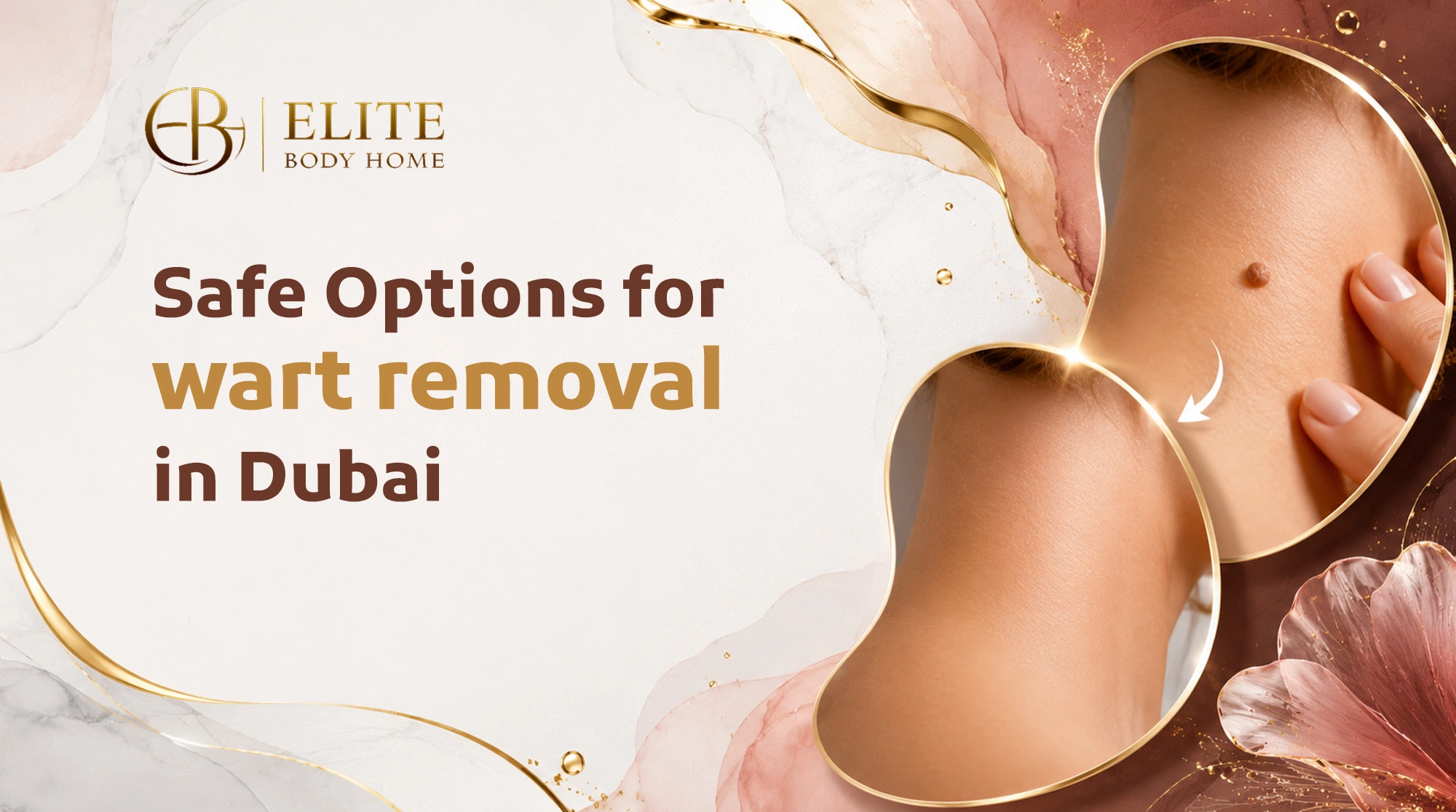
Safe Options for wart removal in Dubai
Warts are common benign skin growths that can appear on the hands, feet, face, around the nails, and other body areas. While usually harmless, they may cause discomfort, pain, or cosmetic concerns. At Elite Body Home Clinics in Dubai, wart removal begins with a thorough diagnosis to identify the wart type, location, and depth. Treatment is tailored to each patient based on skin type, wart characteristics, medical history, and previous treatment response.
Understanding Warts: Why Do They Develop and When Do They Need Treatment?
Warts are commonly caused by certain types of the Human Papillomavirus (HPV). The virus enters the skin through tiny cuts or microscopic breaks and stimulates excessive skin cell growth in a specific area, leading to the development of a rough, raised, or flat skin growth.
Warts may appear as a single lesion or develop in small clusters. In some cases, they are painless and cause little concern. However, they can become bothersome or painful, particularly when they develop in areas exposed to constant pressure or friction.
It is advisable to consult a dermatologist if any of the following signs are present:
- Rapid increase in the size of the wart.
- Spread of warts to multiple areas of the body.
- Pain, bleeding, or signs of inflammation.
- Warts located on the face or around the nails.
- Development of warts in individuals with diabetes or weakened immune systems.
- Failure of home remedies or recurrence after treatment.
How Does the Doctor Determine the Most Suitable Wart Removal Method?
The treatment process begins with a detailed assessment of the condition. The doctor examines the wart’s appearance, color, size, location, and the number of lesions present. Questions may also be asked about how long the wart has been present, whether it causes pain, whether it has recurred in the past, and any previous treatments that have been attempted.
The choice of wart removal treatment depends on several factors, including:
- The type of wart, such as common, plantar, flat, filiform, or periungual warts.
- The location of the wart, including the hands, feet, face, or sensitive areas.
- The depth of the wart and the thickness of the surrounding skin.
- The patient's age and overall health condition.
- The level of discomfort or impact on daily movement.
- The possibility of scarring or pigmentation changes after treatment.
- The presence of medical conditions such as diabetes or poor circulation.
What are the most Common Wart Removal Techniques?
Several medical methods are available for treating warts, and there is no single treatment that is suitable for all cases. Therefore, the doctor selects the most appropriate technique after examination, explaining the advantages, expected number of sessions, and recovery period.
Some of the most common wart removal techniques include:
- Topical treatment.
- Cryotherapy with liquid nitrogen.
- Electrocautery.
- Curettage or simple medical removal.
- Laser wart removal in selected cases.
The goal of treatment is not only to remove the skin growth but also to reduce discomfort, limit its spread, and improve the appearance of the skin.
Topical Treatment for Simple Warts
Topical treatment is usually used for small or superficial warts, particularly those that appear on the hands or feet. One of the most commonly used substances in this type of treatment is salicylic acid, which works by gradually removing accumulated layers of skin.
Topical wart removal treatment requires adherence to instructions because it does not provide immediate results. Improvement may take several weeks, especially if the wart is thick or located on the sole of the foot.
Despite the simplicity of some topical treatments, they are not recommended without consultation in the following cases:
- Warts located on the face.
- Warts near the eye.
- Warts in sensitive areas.
- Diabetes or reduced sensation in the feet.
- Inflammation or an open wound around the wart.
Incorrect use of topical treatments may cause irritation, superficial burns, or pigmentation changes. Therefore, medical evaluation remains an important step before starting treatment.
Laser as a Precise Option for Certain Wart Cases
Laser may be used as one of the medical options for wart removal, especially in cases that do not respond to conventional treatments or when warts are recurrent or located in areas that require a high degree of treatment precision. Laser wart removal works through the following mechanisms:
- Targeting wart tissue: The laser directs light energy to the wart tissue to help destroy it or reduce its size.
- Affecting the blood vessels supplying the wart: Some types of laser target the small blood vessels that nourish the wart, helping to gradually reduce its growth.
- High treatment precision: The laser allows the doctor to work accurately on the targeted area while minimizing the effect on surrounding healthy tissue.
- An option for resistant cases: Laser treatment may be suitable for warts that have not responded to other treatments or have recurred after treatment.
- The number of sessions varies according to the individual case: Some patients may need only one session, while others may require several sessions depending on the number, size, depth of the warts, and the skin’s response to treatment.
The doctor determines the suitability of laser wart removal based on the type and location of the wart and the patient's overall health condition, taking into consideration that results may vary from one person to another.
Is Laser Wart Removal Suitable for All Cases?
Laser wart removal is not suitable for all cases. Laser is an important treatment option, but it is used based on a medical assessment and not simply because it is an advanced technique.
Laser may not be suitable if the warts are simple and can be treated with less invasive methods, if the patient has a high tendency to develop pigmentation or scars, or if the affected area requires a different treatment protocol.
Before choosing laser treatment, the doctor evaluates:
- The type and size of the wart.
- The depth of the lesion.
- Skin color and susceptibility to pigmentation.
- History of previous scarring.
- The location of the warts.
- Previous treatments and their outcomes.
How Do Warts Spread? What Factors Increase Their Transmission?
Warts can spread from one person to another or from one area of the body to another. This usually occurs through direct contact with a wart or by touching contaminated surfaces in moist environments such as changing rooms, swimming pools, and public bathrooms.
The likelihood of wart transmission increases in the following situations:
- Presence of cuts or cracks in the skin.
- Nail biting or picking the skin around the nails.
- Walking barefoot in damp public areas.
- Sharing towels or shaving tools.
- Weakened immunity.
- Excessive sweating or keeping the feet moist for long periods.
How Is a Wart Removal Session Performed?
A wart removal session begins with an evaluation of the condition and selection of the appropriate treatment method. It is then followed by steps aimed at removing the wart safely and reducing the possibility of recurrence.
The steps of a Wart Removal Session are:
The doctor examines the wart and evaluates its size, location, and type to determine whether it requires immediate treatment or can be monitored for a period of time.
The doctor explains the appropriate treatment method, the expected number of sessions, and the possible outcomes according to the nature of the condition.
The targeted area is thoroughly cleaned, and a topical anesthetic may be used in some cases to reduce discomfort, especially if the wart is large or located in a sensitive area.
The doctor uses the appropriate technique, such as cryotherapy, cauterization, laser wart removal, or simple removal, depending on the type of wart and the established treatment plan.
The session usually takes a short time, and the treated area is assessed to ensure that there are no immediate complications.
Mild redness, slight swelling, a superficial crust, or a temporary burning sensation may occur in some cases. Therefore, it is important to follow the doctor’s instructions to protect the treated area and support the recovery process.
Read Also: Wart Removal in Dubai : Effective Solutions to Eliminate Warts and Restore Smooth Skin
After Wart Removal: Instructions to Support Healing and Reduce Recurrence
Aftercare following wart removal is an essential part of treatment success. The in-clinic procedure alone is not sufficient, as the skin needs an appropriate healing period while avoiding habits that may delay recovery or increase the risk of recurrence.
- Keeping the area clean and dry.
- Avoiding picking or scratching the skin or removing the scab.
- Using a dressing if recommended by the doctor.
- Temporarily avoiding swimming or gym activities if the area is newly treated.
- Avoiding exfoliating creams or perfumes on the area without medical advice.
- Wearing comfortable shoes if the warts were on the feet.
- Consulting a doctor if severe pain, pus, persistent bleeding, or increasing redness occurs.
- A comprehensive STD screening panel is recommended as part of routine evaluation, particularly in individuals with genital warts or related symptoms, to help detect any coexisting sexually transmitted infections and ensure appropriate care and management.
If laser or cauterization is used, the doctor may recommend avoiding direct sun exposure if the area is visible, as the skin may be more sensitive during the healing period.
Can Warts Come Back After Treatment?
Yes, warts can recur after treatment in some cases. This is because wart removal addresses the visible skin growth, but it does not always eliminate the virus in the surrounding skin or prevent re-exposure.
The risk of recurrence increases in the following situations:
- Weakened immune system.
- Repeated touching or scratching of the area.
- Incomplete treatment of multiple warts.
- Continued exposure to the virus in public places.
- Persistent moisture or friction, especially in the feet.
Why Choose Elite Body Home Clinics for Wart Removal?
Choosing the right clinic for warts removal Dubai is an important step to ensure a safe and well-structured treatment experience. At Elite Body Home aesthetic clinic, the treatment journey begins with a medical evaluation to understand the type of warts, their location, and their impact on the patient’s comfort and skin appearance.
- Comprehensive medical assessment:
The warts are examined and evaluated to determine the most appropriate treatment method based on each patient’s needs. - Clear treatment plan:
The medical team explains the available options and expected treatment steps clearly before starting the procedure. - Focus on safety and sterilization standards:
Wart removal is performed according to protocols designed to ensure a safe treatment environment and reduce the risk of complications. - Careful handling of sensitive areas:
Areas such as the face, around the nails, and soles of the feet require special care and precision, which is considered in the treatment plan. - Selection of the appropriate technique for each case:
Medical consultation helps determine whether the case requires topical treatment, cryotherapy, cauterization, or laser based on the doctor’s evaluation. - Follow-up and post-treatment guidance:
The patient receives clear aftercare instructions, along with information about the expected recovery period and the possible need for additional sessions if required.
Take the First Step Toward Clearer, Healthier Skin
If you're looking for safe and professional warts removal in Dubai, the experienced team at Elite Body Home Clinics is here to help. After a thorough medical assessment, we create a personalized treatment plan based on your skin condition and the type of wart.
Contact us today to schedule your consultation and take the first step toward healthier, clearer skin with expert care.
Frequently Asked Questions About Wart Removal Dubai
Is wart removal painful?
The patient may feel mild discomfort during or after the procedure. The level of pain varies depending on the location, depth of the wart, and the treatment method used. In some cases, a topical anesthetic can be used to reduce discomfort.
How many sessions does wart removal require?
The number of sessions depends on the size of the wart, its location, type, and the skin’s response to treatment. Some simple cases may improve after a single session, while deep or recurrent warts may require more than one session.
Can warts be treated at home?
Some simple warts may respond to topical treatments, but home treatment is not recommended for warts on the face, sensitive areas, or in patients with diabetes or weakened immunity. Medical consultation is necessary if the warts are painful or spreading.
Does wart removal leave scars on the skin?
Temporary redness, crusting, mild pigmentation, or slight marks may occur in some cases, especially if the wart is deep or aftercare instructions are not followed properly. Choosing the appropriate treatment technique helps reduce these risks.
Can warts come back after removal?
Warts may recur in some cases due to the virus remaining in the skin or re-exposure to it. Prevention and medical follow-up help reduce the likelihood of recurrence.
When should you visit a dermatologist for warts removal in Dubai?
It is recommended to see a dermatologist if the warts are painful, spreading, bleeding, appear on the face or around the nails, or do not improve with simple treatments. Early consultation is also advised in cases of chronic conditions or weakened immunity.