Botox or Fillers: Which One Actually Fixes Your Concern?
How do Botox and dermal fillers address different facial concerns?
Botox temporarily relaxes muscles involved in expression lines, while dermal fillers add volume beneath the skin and can change facial contours. The relevant distinction is whether the concern comes from movement, volume loss or static lines. A consultation should assess your features and discuss likely benefits, limitations and risks before either treatment.
The question of botox or fillers is common among people considering non-surgical cosmetic treatments. While both are injectable treatments, they work differently. Understanding the difference between botox and fillers helps you choose the right option, whether you want to reduce wrinkles, restore facial volume with a dermal filler, or treat excessive sweating with underarm botox.
At Elite Body Home Clinics, our specialists carefully assess your facial features and skin condition to determine whether botox or fillers is the most suitable treatment for your needs.
Which Is Better for Wrinkles: Botox or Fillers?
When deciding between botox or fillers, the type of wrinkle is the most important factor.
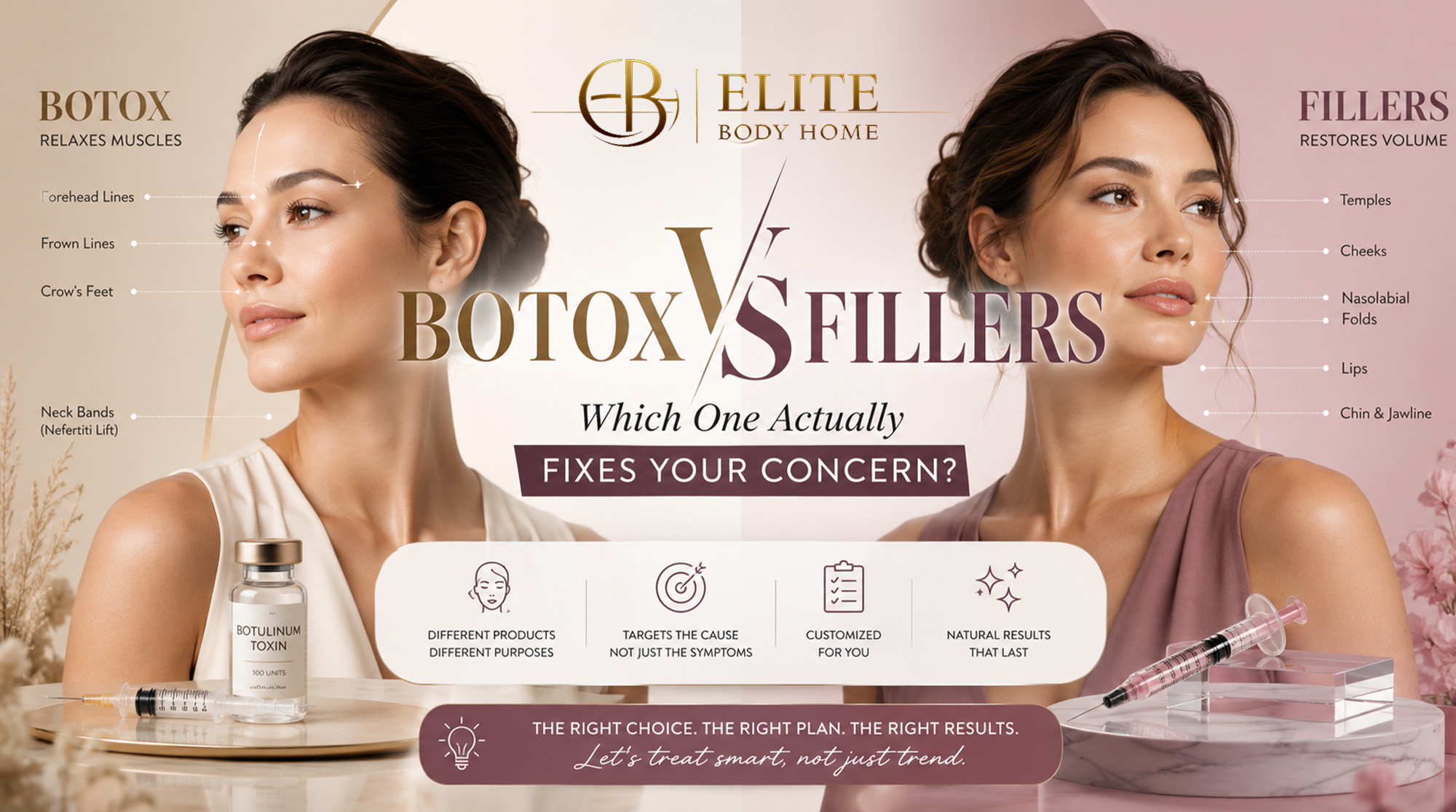
Botox is a purified protein that temporarily relaxes the facial muscles responsible for expression lines, while a dermal filler restores lost volume beneath the skin, smooths static wrinkles, and enhances facial contours.
If you're wondering whether botox or fillers are better for wrinkles, the answer depends on whether your wrinkles are dynamic or static.
When Might Botulinum Toxin Be Considered?
Botox is recommended for wrinkles and medical conditions caused by muscle or gland activity, including:
- Forehead lines.
- Frown lines between the eyebrows.
- Crow's feet around the eyes.
- Brow lift and mouth corner lift.
- Chronic migraine treatment under approved medical protocols.
- Jaw muscle tension and teeth grinding.
Is Underarm Botox Used for Excessive Sweating?
In the United States, BOTOX is approved for severe primary axillary hyperhidrosis inadequately managed with topical agents. That indication does not apply automatically to every toxin brand or to palms and soles. Local authorisation, suitability, response and duration need individual review.
Read Also: Underarm Botox: The Complete Guide to Treat Hyperhidrosis
When Might Dermal Fillers Be Considered?
A dermal filler is the preferred treatment when the concern is volume loss rather than muscle movement. Fillers can:
- Restore cheek volume.
- Enhance lip shape and fullness.
- Improve under-eye hollows.
- Fill nasolabial folds and smile lines.
- Define the chin and jawline without surgery.
Modern dermal filler treatments provide natural-looking facial rejuvenation while maintaining normal facial expressions.
Botox or Fillers: How Do You Choose the Right Treatment?
If you're still wondering whether botox or fillers are right for you, the answer depends on the underlying cause of your concern.
- If wrinkles appear only during facial expressions, Botox is usually the better choice.
- If wrinkles remain visible even when your face is relaxed or you've lost facial volume, a dermal filler is generally more appropriate.
- In many cases, combining botox and fillers provides the most balanced and natural-looking rejuvenation.
Factors That Determine Whether Botox or Fillers Is Right for You
Choosing between botox or fillers depends on several factors, including:
- Skin quality.
- Wrinkle severity.
- Degree of facial volume loss.
- Facial anatomy.
- Individual cosmetic goals.
An individual clinical consultation helps assess whether Botox, a dermal filler, or a combination of botox and fillers will achieve the best outcome.
Before and After Botox or Filler Treatment
Following your doctor's instructions before and after treatment helps minimize bruising and swelling while improving results.
- Avoid blood-thinning medications and supplements, including aspirin and vitamin E, as advised.
- Do not rub or massage treated areas after Botox injections.
- Avoid direct sun exposure until redness disappears.
- Follow all aftercare instructions provided by your cosmetic physician.
Why Choose Elite Body Home Clinics?
At Elite Body Home Clinics, we believe every face deserves a personalized treatment plan. Our experienced doctors perform comprehensive facial assessments before recommending botox or fillers.
We use only genuine, approved products, including premium dermal filler brands and advanced Botox techniques to achieve natural, safe, and long-lasting results.
Whether you're interested in wrinkle reduction, facial contouring, or underarm botox for excessive sweating, our specialists create customized treatment plans designed around your individual goals.
Book Your Consultation Today
If you're unsure whether botox or fillers is the right option, schedule a consultation at Elite Body Home Clinics. Our experienced cosmetic physicians will evaluate your facial anatomy and recommend the most suitable treatment, whether that's Botox, a dermal filler, or a combination of botox and fillers for optimal results.
Book your consultation today and take the first step toward natural, refreshed, and confident-looking skin.
This content has been reviewed by the medical team at Elite Body Home Clinics.
Frequently Asked Questions
Are botox and fillers the same thing?
No. Botox and fillers are different treatments. Botox temporarily relaxes the muscles that cause dynamic wrinkles, while a dermal filler restores lost facial volume, fills static lines, and enhances facial contours.
Which is better: botox or fillers?
The answer depends on your concerns. Botox or fillers may both be effective, but Botox is ideal for expression lines, while a dermal filler is recommended for volume loss and deep static wrinkles.
How long do Botox and dermal filler results last?
Duration varies by toxin or filler product, treatment area and individual response. Ask about the specific product rather than relying on a universal maintenance interval.
What is underarm botox, and when is it used?
The US BOTOX indication is severe primary underarm hyperhidrosis inadequately managed with topical agents. Product, local authorisation and medical suitability matter, and neither the degree nor duration of sweat reduction is guaranteed.
Are botox or fillers injections painful?
Most patients experience only mild discomfort during botox or fillers injections. A topical numbing cream may be applied before treatment, and any redness or swelling usually disappears within a short time.
When do the results of botox and fillers appear?
Filler can change volume early, but swelling affects the initial appearance. Toxin effects develop over time. Settling and response depend on the product and procedure; follow-up is individual.
Can botox and fillers be combined in one session?
Yes. Many cosmetic specialists combine botox and fillers in a single treatment plan to reduce wrinkles, restore facial volume, and achieve natural-looking facial rejuvenation.
What are the possible side effects of botox or fillers?
Temporary redness, swelling, or bruising may occur after botox or fillers injections. Serious complications are uncommon when treatment is performed by an experienced, qualified physician.
Who should not receive botox or fillers?
Botox or fillers are generally not recommended during pregnancy or breastfeeding, or for individuals with active infections, certain neuromuscular disorders, blood clotting problems, or allergies to the product ingredients.
How do I choose the right doctor for botox and fillers?
Choose a certified clinic with experienced physicians who use genuine products, including high-quality dermal filler brands and approved Botox products. A thorough consultation should always be performed before treatment to discuss possible benefits, limitations and risks.
Disclaimer: This article is intended for educational and health awareness purposes only and should not be considered a substitute for professional medical advice.